
AI and Big Data: Power of Insights Unleashed
This blog explains AI and Big Data
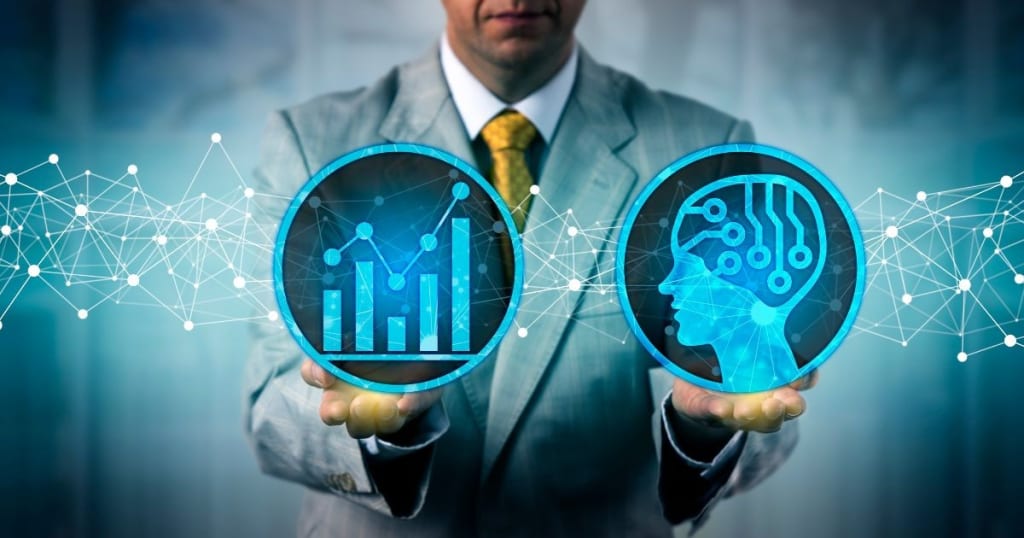
In today's world, businesses are constantly being hit with a huge amount of information. In such a data-driven world, extraction of meaningful insights from the deluge of data is important in making decisions and creating an edge over the competition. This is where the powerful combination of Artificial Intelligence and Big Data comes into play.
Where AI Meets Big Data
Big data can be defined as large and complex data sets that cannot be efficiently processed by traditional applications. It typically involves data sets with volume, velocity, variety, and veracity. On the other hand, AI makes machines learn from the data, identify the patterns, and make predictions or decisions without explicit programming.
When combined, AI and Big Data can make a very powerful synergy that unlocks unseen insights. In particular, Artificial Intelligence algorithms can process huge data at very high speeds, discovering concealed patterns and correlations that human beings cannot identify on their own. Such gained insights can be used in process optimization, improvement of customer experience, and innovation.
Enhancing Decision Making
AI and Big Data will, therefore, empower an organization to make data-driven decisions more confidently. Here's how:
Predictive Analytics: One may build predictive models by analyzing historical trends and patterns using AI. It helps in predicting the future outcome of any action or event. This may further help the business in dynamically changing market scenarios, consumer behavior, and potential risks.
• Customer Insight: Customer preference and behavior are the backbone of any customer relationship. AI can interpret customer data to get insights that would be advantageous in developing products and services to meet these needs.
• Fraud Detection: AI makes use of anomaly detection in large datasets to identify fraudulent activities. This helps safeguard businesses from monetary loss and reputational damage.
AI will be able to analyze a number of factors in evaluating risks and developing mitigation methods for the same. This would then assist organizations in making very informed decisions in uncertain environments.
Role of Data Science
Data scientists are the architects who connect these dots all the way from raw data to meaningful insights. They acquire the skill set to collect, clean, and process data for analysis. Besides, they apply statistical and machine learning techniques to extract meaningful patterns and build predictive models.
The base should be strong enough to let one thrive in the field of Data Science. Expertise and practice needed in harnessing the full potential of AI and Big Data can be provided by a good institute for doing a course in data science.
The healthcare sector is witnessing a sea change, driven by the convergence of AI and Big Data. With millions of bytes of patient data generated every day—from EHRs to wearable devices—the potential for improving outcomes, trimming costs, and accelerating the pace of drug discovery is immense.
Revolutionize Healthcare using AI and Big Data
Precision Medicine: AI identifies trends by analyzing genetic information, patient clinical data, and lifestyle data to then formulate an individualized treatment plan for each patient. Such an approach would enhance the effectiveness of the treatment while reducing possible adverse side effects.
Early Disease Detection: AI algorithms can read through medical images such as X-rays and MRIs to identify the very first signs of diseases like cancer, hence facilitating early interventions and improving chances of survival.
Drug Discovery: AI can quicken the pace of drug discovery by examining large datasets in molecular structures for drug candidates. This can significantly reduce both the time and cost related to bringing new drugs to market.
Predictive Analytics: AI can be used to predict outbreaks of diseases, readmission to hospitals, and patient outcomes and, therefore, implement quality in patient care and resource optimization.
Fraud Detection: AI can identify patterns of fraudulent claims, thereby reducing healthcare costs and saving patients from financial harm.
Role of Data Scientists in Healthcare
Data scientists play a huge role in applying AI and Big Data in healthcare. They are engaged in cleaning, preprocessing, and analyzing complex health data to infer useful insights from them. By Building predictive models and developing AI algorithms, data scientists contribute towards improved patient care and operational efficiency.
One needs to have a very strong base of data science concepts at the core to be successful in this domain. The best institute for data science will impart the necessary skills and knowledge to deal with problems and potentials associated with health data.
Conclusion
The convergence of AI and Big Data is disrupting world economies. Organizations that harvest these technologies effectively gain a competitive edge, enhance operational efficiency, and thus become the drivers of innovation. For effectively deriving value from AI and Big Data, investments in data science talent and robust infrastructure for data are important.
About the Creator
Fizza Jatniwala
Fizza Jatniwala, an MSC-IT postgraduate, serves as a dynamic Digital Marketing Executive at the prestigious Boston Institute of Analytics.
Keep reading
More stories from Fizza Jatniwala and writers in 01 and other communities.
AI in Finance: Algorithmic Trading and Risk Management
Artificial Intelligence is currently disrupting financial services in ways that transform operational structures and decision-making at banks and other financial institutions. Two of the most prominent applications are algorithmic trading and risk management. This blog explores those applications, their associated benefits, and how the best graduate programs in data science can successfully prepare future professionals for these exciting advancements.
By Fizza Jatniwala2 years ago in 01
Understanding Ceramic Components: Materials, Manufacturing, and Modern Applications
Ceramics have been used by human societies for thousands of years, evolving from simple pottery into highly engineered materials used in advanced industries. Today, the word ceramic refers not only to traditional objects but also to technical materials designed for precision, durability, and performance. Modern discussions around ceramic components reflect this long history of innovation and adaptation.
By charliesamuel4 days ago in 01
How a Healthcare 4.0 Strategy Is Reshaping Patient-Centered Care
Healthcare is undergoing one of the most profound transformations in modern history. Advances in artificial intelligence, connected devices, data analytics, and cloud computing are reshaping how care is delivered, managed, and experienced. Hospitals, clinics, and healthcare organizations are no longer limited to traditional systems; instead, they are moving toward digitally connected ecosystems that focus on efficiency, predictive insights, and personalized treatment.
By Steve Waugh6 days ago in 01
TUS NUA - ch 53
TUS NUA – ch 53 New Beginnings – Mia and Midnight (*)(*)(*) Finola knew Ali’s brother-in-law needed to put his mind at rest. She fed her arm through his and led him outside. “We’ll sit here. If you like, I can put a block around us so our conversation will be private.”
By Margaret Brennan6 days ago in Fiction


Comments
There are no comments for this story
Be the first to respond and start the conversation.