
AI Agents and Their Integration: Transforming Industries in 2025
In the fast-evolving world of artificial intelligence, one of the most groundbreaking advancements is the rise of AI agents.

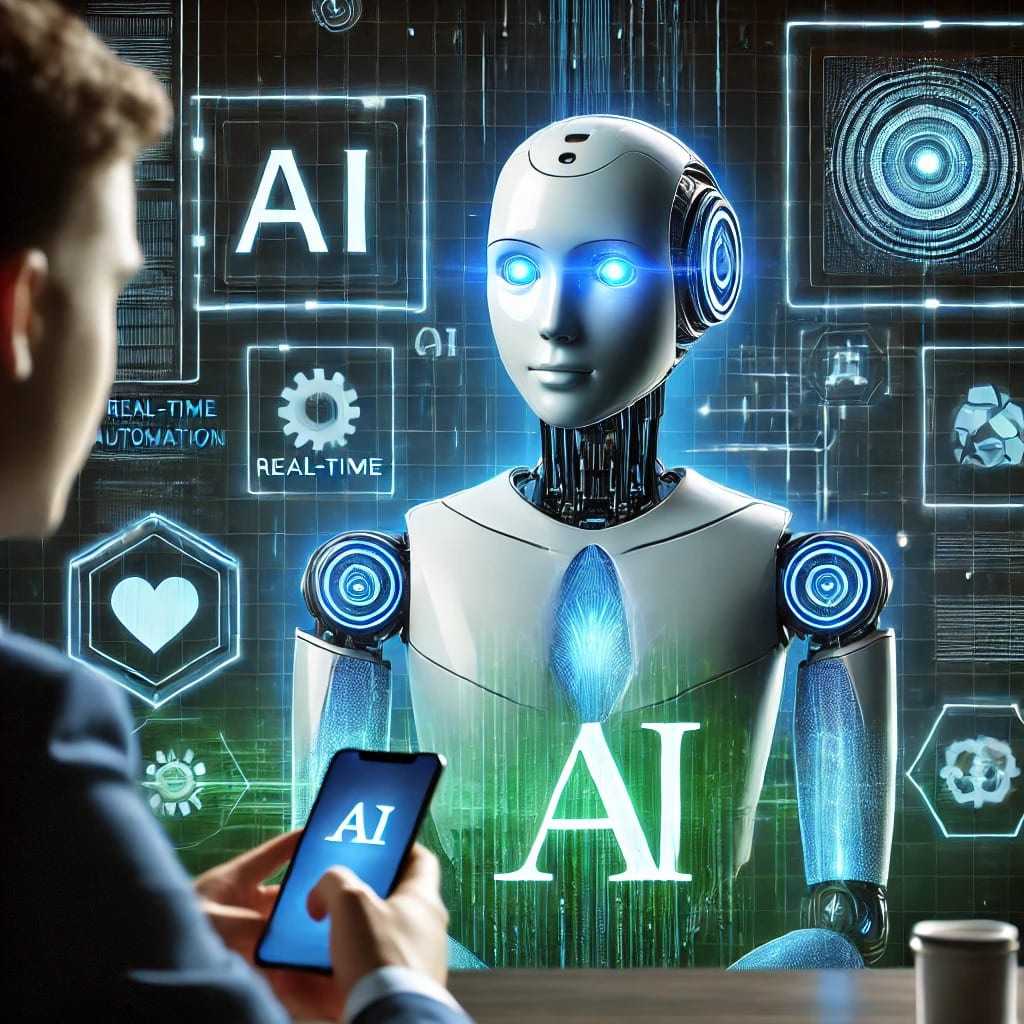
In the fast-evolving world of artificial intelligence, one of the most groundbreaking advancements is the rise of AI agents. These intelligent systems are designed to execute tasks based on simple instructions, making them invaluable across various industries. Companies like Nvidia, AT&T, and Verizon are at the forefront of this revolution, leveraging AI agents to enhance customer service, optimize network management, and streamline business operations. As AI agents become more sophisticated, their integration into daily workflows is reshaping how businesses function and interact with consumers.
The Rise of AI Agents
AI agents have moved beyond simple automation. Unlike traditional AI models that require direct human supervision, these agents operate autonomously, learning and adapting to new environments. They are built on large language models (LLMs) and deep learning algorithms, enabling them to make data-driven decisions in real time.
Nvidia, a pioneer in AI hardware and software, has been instrumental in developing AI agents capable of handling complex computing tasks. Their innovations in AI-powered GPUs provide the computational power needed for training and deploying AI agents at scale. Meanwhile, telecommunications giants AT&T and Verizon are integrating AI agents to enhance customer interactions, detect network anomalies, and optimize service delivery. By automating repetitive tasks and providing real-time support, these companies are reducing operational costs while improving customer satisfaction.
How AI Agents Are Reshaping Industries
The integration of AI agents is not limited to telecommunications. Various industries are adopting these intelligent systems to improve efficiency, decision-making, and user experience. Some of the key sectors benefiting from AI agents include:
1. Customer Service
AI-powered chatbots and virtual assistants have revolutionized customer support. Unlike traditional chatbots that rely on pre-programmed responses, AI agents understand context, process natural language, and provide more human-like interactions. Verizon’s AI-driven support agents, for example, can diagnose network issues and guide customers through troubleshooting steps without the need for human intervention.
2. Healthcare
AI agents are playing a crucial role in the medical field by assisting doctors in diagnosing diseases, managing patient records, and personalizing treatment plans. With real-time access to vast amounts of medical data, AI agents can predict health risks and recommend preventive measures, ultimately improving patient outcomes.
3. Finance and Banking
Financial institutions are leveraging AI agents to enhance fraud detection, automate transactions, and improve customer engagement. These agents analyze transaction patterns, flag suspicious activities, and offer personalized financial advice, making banking more secure and efficient.
4. Cybersecurity
In an era where cyber threats are becoming increasingly sophisticated, AI agents provide an extra layer of security by monitoring network activity, detecting anomalies, and mitigating risks. Their ability to process vast amounts of data in real time helps organizations respond to cyber threats before they escalate.
Challenges and Ethical Considerations
While AI agents offer numerous benefits, their widespread adoption comes with challenges. Ethical concerns, such as data privacy and bias in AI decision-making, need to be addressed to ensure responsible AI usage. Additionally, job displacement due to automation is a growing concern, making it crucial for businesses to focus on workforce reskilling and upskilling initiatives.
Regulatory bodies are working on frameworks to ensure AI is used ethically and transparently. Companies must prioritize fairness, accountability, and security to build public trust in AI-driven systems.
The Future of AI Agents
The evolution of AI agents is still in its early stages, but their potential is limitless. As AI technology continues to advance, we can expect more intelligent, adaptable, and autonomous agents capable of performing complex tasks across industries. With proper regulations and ethical guidelines, AI agents will drive efficiency, innovation, and economic growth while maintaining a balance between automation and human involvement.
AI agents are not just the future—they are the present. Businesses that embrace these intelligent systems today will be better positioned for success in the ever-changing digital landscape.
About the Creator
Keep reading
More stories from Fabulous Finder and writers in 01 and other communities.
The Untold Stories of India's Freedom Struggle
Introduction: Beyond the Textbooks India’s struggle for independence is often told through the lens of well-known leaders like Mahatma Gandhi, Netaji Subhas Chandra Bose, and Sardar Patel. While these figures played crucial roles, the freedom movement was powered by countless lesser-known warriors whose sacrifices have faded into history.
By Fabulous Finderabout a year ago in 01
Understanding Uncensored AI, Chatbots, and Generative Media in the Modern Internet
Artificial intelligence has become a defining technology of the digital era. From recommendation systems to automated writing tools, AI increasingly shapes how people interact with information. Among the most visible applications are chatbots and generative systems that create text, images, and videos. In recent years, interest has grown around concepts such as uncensored AI, ai chat generator tools, ai image generator platforms, and advanced video generator systems. These developments raise important questions about creativity, control, ethics, and the future of online content.
By James Mburu3 days ago in 01
Boosting Oracle Fusion Performance with AI-Enhanced Data Insights
In the digital era, data is one of the most valuable assets a business can possess. As companies continue to rely on cloud-based ERP systems like Oracle Fusion to streamline their operations, the integration of AI-powered data insights has become a game-changer. With AI agents for Oracle Fusion, businesses can unlock deeper, more actionable insights from their data, driving better decision-making and improving overall performance.
By Rchilli Inc3 days ago in 01



Comments
There are no comments for this story
Be the first to respond and start the conversation.