
Advancements in Solar Cell Technology: The Rise of N-Type TOPCon Cells
Explore the cutting-edge N-Type TOPCon solar cell technology, a game-changer in solar energy. Learn how this innovative approach eliminates metal-wafer contact, significantly boosting conversion efficiency and reducing recombination losses. Discover the industry’s shift towards more sustainable and efficient solar power solutions.

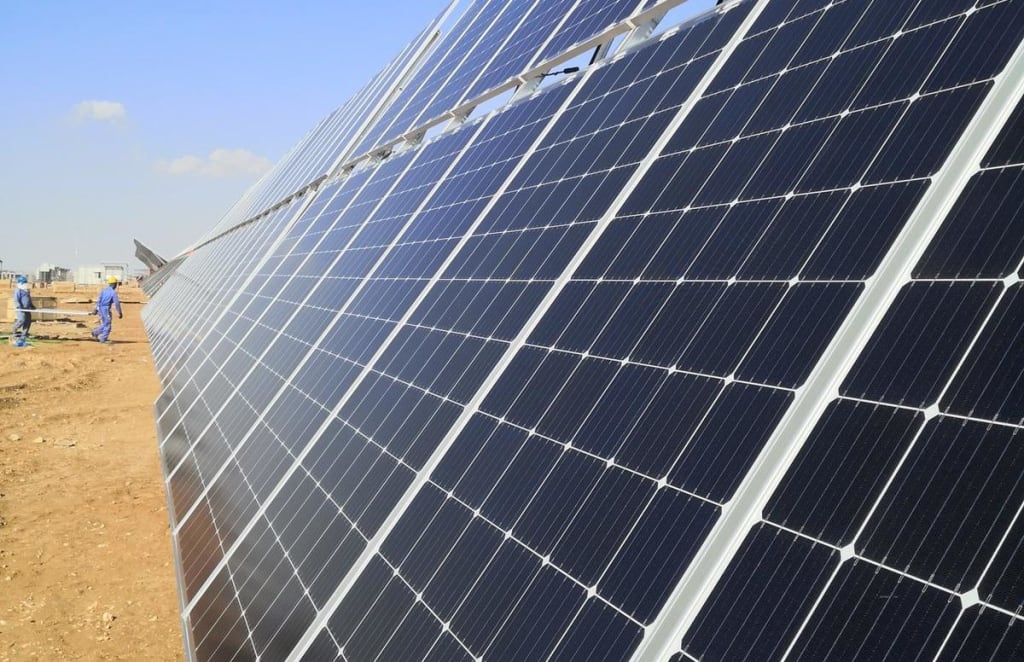
Solar energy is becoming an increasingly important part of the global energy landscape. As the world seeks cleaner and more sustainable sources of power, the efficiency and cost-effectiveness of solar cells are critical factors. In this blog, we will explore the remarkable evolution of solar cell technology, focusing on the groundbreaking N-Type Tunnel Oxide Passivated Contact (TOPCon) cells.
The Need for Advancements in Solar Cell Technology
Efficiency is at the heart of solar cell development, as higher efficiency translates into better energy production and cost savings. As traditional silicon solar cells approach an efficiency rate of 23%, one of the key factors limiting further improvements is recombination loss due to metal contacts. Over the years, the photovoltaic industry has actively researched contact passivation to overcome this limitation.
Enter TOPCon Technology
Among the various approaches and materials investigated for contact passivation, TOPCon technology has emerged as the industry’s frontrunner. What sets TOPCon apart is its ingenious design that avoids direct metal contact with the silicon wafer. Instead, a thin tunneling oxide layer is applied, followed by a highly doped layer of n or p-type silicon that connects with the metal at the ends. This tunneling oxide layer efficiently blocks one type of carrier, making it an essential part of the passivating contact structure.
Improving Passivation Quality
To enhance the quality of passivation in TOPCon technology, the physical properties and thermal stability of the tunnel oxide layer must be carefully considered. A typical TOPCon silicon solar cell includes a boron-diffused front emitter, a tunnel-SiOx/poly-Si/SiNx:H structure on the rear side, and screen-printed electrodes on both sides. This structure has achieved an impressive median efficiency of 23.91% and the highest efficiency of 24.58%.
Interdigitated Back-Contact Solar Cells
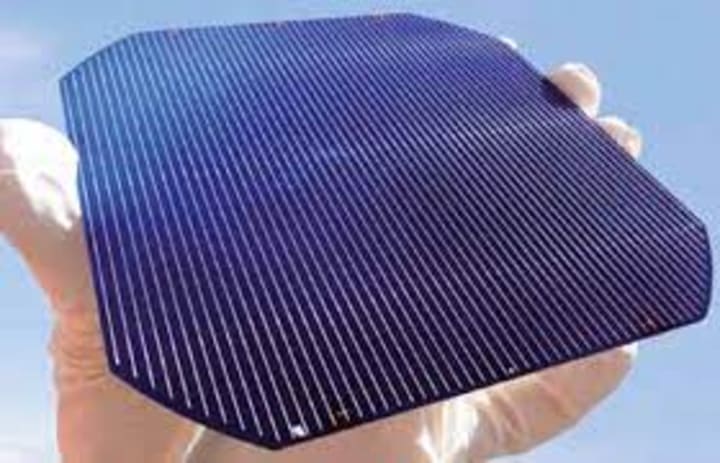
With further enhancements in the optoelectrical properties for both sides of contacted cells, interdigitated back-contact solar cells have achieved conversion efficiencies of up to 26%. This technology represents a significant leap forward in solar cell performance.
Advantages of TOPCon Solar Cells
Compared to traditional silicon solar cells, TOPCon cells offer several advantages:
1. Enhanced Conversion Efficiency: The extremely thin oxide layer effectively satisfies dangling bonds on the single crystal’s surface, resulting in increased conversion efficiency.
2. Accelerated Carrier Transfer: Depending on the substrate’s conductivity type, the fine oxide layer can speed up electron or hole transfer, optimizing cell performance.
3. Reduced Junction Resistance: The heavily doped silicon used in TOPCon technology allows for decreased junction resistance, leading to improved current output.
Continual Evolution of Metal Pastes
The development of appropriate metal pastes has also been evolving alongside solar cell manufacturing. Based on the levelized cost of electricity (LCOE), n-type TOPCon cells are considered strong contenders for mainstream adoption after achieving efficiency rates of up to 23%.
Recombination Loss Reduction
One of the most critical challenges in solar cell design is reducing carrier recombination at the metal-silicon wafer interface. Two primary approaches have been used to address this issue:
1. Interface Capacity Minimization: This approach involves smoothly doping the Passivated Emitter and Rear Cell (PERC) technology, with native doping limited to the emitter contact area.
2. Silicon Layer Passivation: The Hetero-junction with Intrinsic Thin-layer (HIT) solar cell employs a thin film of passivated silicon to separate the silicon wafer from the metal. This approach has led to impressive efficiencies, with HIT solar cells reaching approximately 26.7% efficiency.
The Fraunhofer Institute in Germany has made significant strides with the N-type solar cell, featuring complete charge carrier selective back contacts. These dual-faced connection solar cells have achieved record efficiencies of approximately 26.7%.
The Future of N-Type TOPCon Cells
It’s clear that N-type TOPCon technology is poised for a bright future. Projections indicate that N-type TOPCon cells will continue to dominate the market, with efficiencies expected to surpass 28% by 2028.
Scaling Up Production
By the end of 2023, the total wafer capacity is estimated to reach around 1172 GW, with the majority of this newly added capacity attributed to N-type TOPCon cell technology. N-type wafer capacity is projected to reach 676 GW, accounting for 57.7% of the total capacity.
Other technologies, such as Heterojunction Technology (HJT), have also evolved and will capture a significant market share in the future. However, N-type TOPCon technology is set to dominate the Indian solar market in the coming years.
Optimizing Efficiency Through Bifaciality
In the quest for higher efficiency, researchers have explored the optimization of rear side contact finger width in N-type TOPCon solar cells. As the width of the rear side finger increases, the efficiency of the rear side cell decreases slightly, while the efficiency of the front side of the cell increases. The optimal rear side finger width has been determined to be 100 μm, resulting in a rear side efficiency of 19.85% and a front side efficiency of 23.35%, with an overall efficacy of 27.37% on both sides.
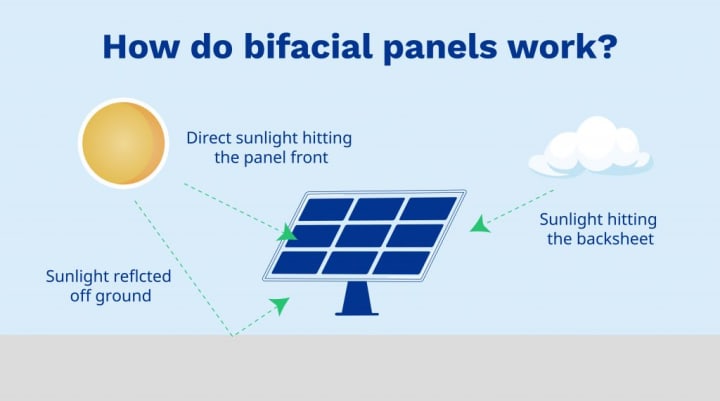
The evolution of solar cell technology is both exciting and essential for our transition to cleaner and more sustainable energy sources. N-type TOPCon cells represent a significant advancement in the field, with their innovative passivating contact design, high efficiency, and future potential for even greater performance. As the industry continues to push the boundaries of solar cell technology, we can look forward to a brighter and more sustainable energy future.
About the Creator
How to Choose the Best Mobile App Development Company 2026
Google has fundamentally transitioned. It is now an Authority Validation layer. This change occurred in early 2026. Selecting a development partner now requires a new process. You must audit their footprint within the Trust Graph. Do not just review static portfolios. Static images are easy to fake now.
By Devin Rosario7 days ago in 01




Comments
There are no comments for this story
Be the first to respond and start the conversation.