
Adobe - Transforming Digital Creativity
Adobe is a leading software company that has revolutionized the way people create and share digital content. Founded in 1982 by John Warnock and Charles Geschke, Adobe has grown into a multinational company with a wide range of products and services that empower creative professionals, businesses, and individuals to express their ideas and bring them to life. In this article, we'll explore the history of Adobe, its products and services, and how it has transformed digital creativity.


History of Adobe
Adobe was founded in 1982 in Mountain View, California, with the goal of developing software that could handle digital fonts. The company's first product was Adobe PostScript, a page description language that allowed documents to be printed with high-quality typography.
In 1985, Adobe released its first version of Illustrator, a vector graphics editor that allowed designers to create digital artwork using geometric shapes and lines. This was followed by the release of Photoshop in 1988, a raster graphics editor that became the industry standard for photo editing and manipulation.
Over the years, Adobe continued to expand its product line and acquire other software companies, including Macromedia in 2005, which gave Adobe control over popular programs such as Flash and Dreamweaver. In 2011, Adobe announced that it would focus on cloud-based services and subscription-based software, which led to the development of the Adobe Creative Cloud, a suite of applications that includes Photoshop, Illustrator, InDesign, and many others.
Products and Services
Adobe's products and services are designed to meet the needs of creative professionals, businesses, and individuals who want to create, manage, and share digital content. Here are some of the key products and services offered by Adobe:
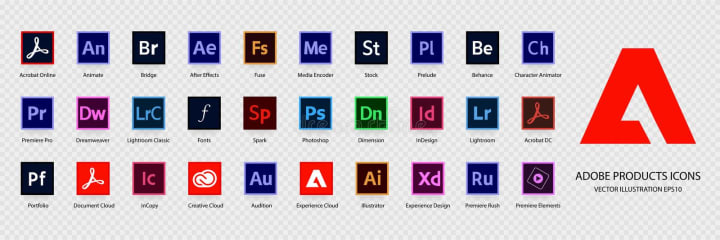
Adobe Creative Cloud - The Adobe Creative Cloud is a suite of applications that includes Photoshop, Illustrator, InDesign, Premiere Pro, After Effects, and many others. These applications are available through a subscription-based model and can be accessed from any device with an internet connection.
Adobe Acrobat - Adobe Acrobat is a software application that allows users to create, edit, and share PDF documents. It's a must-have tool for anyone who needs to share documents in a secure and reliable format.
Adobe Stock - Adobe Stock is a collection of millions of high-quality images, videos, and illustrations that can be licensed for commercial use. It's a great resource for designers, marketers, and anyone who needs high-quality media content.
Adobe Experience Cloud - The Adobe Experience Cloud is a suite of applications that helps businesses create, manage, and optimize their digital experiences. It includes tools for analytics, advertising, marketing, and e-commerce.
How Adobe has transformed digital creativity
Adobe has transformed digital creativity in several ways, by making it more accessible, collaborative, and efficient. Here are some of the key ways Adobe has transformed digital creativity:
Accessible - Adobe's products and services are designed to be accessible to anyone who wants to create digital content. Whether you're a professional designer or an amateur photographer, Adobe's tools are easy to use and intuitive, with a range of features and functionalities that can help you achieve your creative goals.
Collaborative - Adobe's cloud-based services and subscription-based software make it easy for teams to collaborate on projects in real-time, no matter where they are in the world. With tools like Adobe Creative Cloud Libraries, designers and developers can share assets, colors, and styles across applications, making it easy to maintain a consistent brand identity.
Efficient - Adobe's products and services are designed to help creative professionals work more efficiently and productively. From automating repetitive tasks with Adobe Sensei, to streamlining workflows with Adobe Creative Cloud Libraries, Adobe's
Certainly, here are some additional information on Adobe that you may find interesting:
Creative Cloud Subscription Model: In 2013, Adobe shifted its business model from selling software licenses to a subscription-based model known as Creative Cloud. This meant that customers had to pay a monthly or yearly fee to access Adobe's products instead of purchasing them outright. While this move was initially met with some resistance, it has proven to be successful for Adobe, as it provides a steady stream of revenue and allows for more frequent updates and new features to be added to their products.
Innovation: Adobe has a strong reputation for innovation and is constantly pushing the boundaries of what is possible with digital technology. One notable example is Adobe Sensei, the company's artificial intelligence and machine learning platform. Sensei powers a range of features across Adobe's products, including content-aware fill in Photoshop, automated photo editing in Lightroom, and speech-to-text functionality in Premiere Pro.
Environmental Sustainability: In recent years, Adobe has made a concerted effort to reduce its environmental impact. The company has set a goal of achieving net-zero carbon emissions by 2050 and has made significant progress towards this goal. For example, Adobe has invested in renewable energy and has committed to using 100% renewable electricity in its operations by 2035.
Community Engagement: Adobe has a strong focus on community engagement and supporting creative talent around the world. One way it does this is through the Adobe Creative Residency program, which provides financial support and resources to up-and-coming artists and designers. Adobe also hosts a range of events and initiatives, such as the Adobe Max conference and the Creative Jam series, which bring together creatives from diverse backgrounds to collaborate and share their work.
Corporate Social Responsibility: In addition to its environmental and community engagement initiatives, Adobe has a strong commitment to corporate social responsibility. The company has been recognized for its efforts to promote diversity and inclusion in the workplace and has made significant investments in education and workforce development programs. Adobe has also been recognized for its transparency and ethical business practices, receiving high scores on the Corporate Equality Index and the Dow Jones Sustainability Index.

In conclusion, Adobe is a global leader in digital media and marketing solutions, known for its innovative products and commitment to environmental sustainability, community engagement, and corporate social responsibility. With a strong focus on empowering creatives and pushing the boundaries of what is possible with digital technology, Adobe is poised to continue shaping the future of design and creativity for years to come.




Comments
There are no comments for this story
Be the first to respond and start the conversation.