
A Criminological study of the film Joker
Joker's controversy in USA

Introduction
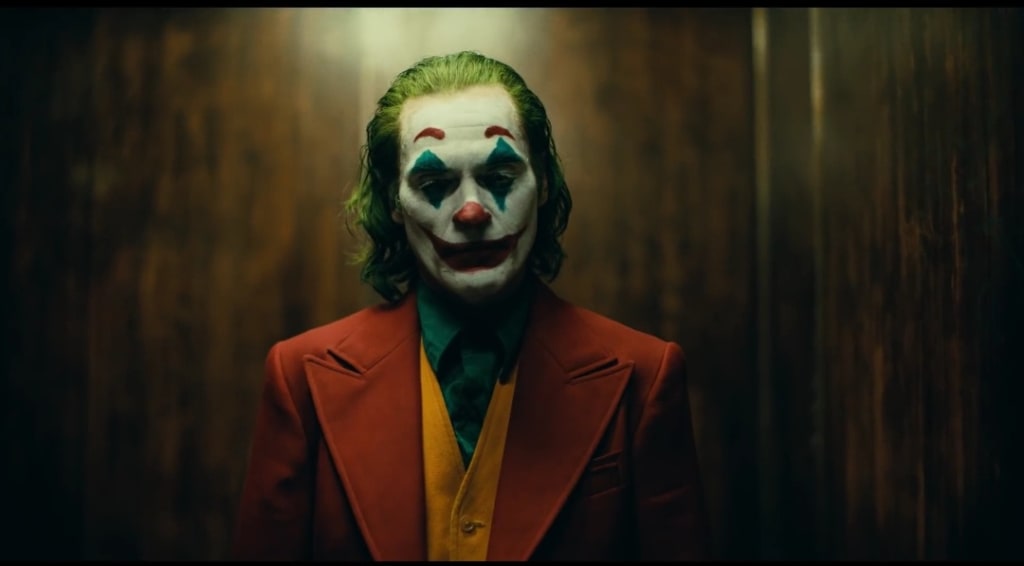
The movie chronicling the history of the Joker is among the most significant cinematic releases of the year 2019.
Joker is a movie that Todd Phillips directed, Scott Silver wrote, and Joaquin Phoenix plays the lead part in.
It was made available on October 4th, 2019. I’ll give a criminological analysis of this movie in this essay. In fact, this movie is also about the causes of crime and how a person becomes a criminal.
The movie shows us a lot of violence, and it makes a sincere effort to investigate why it happened so suddenly.
This kind of research could be derived from the idea of cultural criminology.
The field of cultural criminology examines how crime interacts with culture and views crime as a cultural product.
Cultural criminology is a fairly vast field. Also, as we will see in the essay, Nicole Rafter is the author of the popular criminology, a subfield of cultural criminology.
The issue that arose in the USA surrounding the film’s distribution will then be covered briefly in the third section.
A brief synopsis of the film
The Joker figure has been reinterpreted in this tale numerous times in film and, naturally, in comic books.
The story is set in the 1980s in the fictitious city of Gotham, which is unmistakably New York. There is a great deal of resentment and discontent throughout the city. We are following mentally ill failing comic Arthur Fleck in this setting.
This origin story of the Joker is magnificent, and the excellent acting of the actors, including Joaquin Phoenix as the Joker, furthers the film’s reality.
So, it is intriguing to evaluate the veracity of the causes of the Joker’s behaviour. This movie is a fantastic fit for a criminological study, as the article will show later.
I. Why is fiction interesting in criminological studies? Rafter’s idea of Popular criminology
The popular criminology theory
Through the idea of “Popular Criminology,” the popular culture has made its way into the field of criminology. Nicole Rafter has created and reformulated popular criminology.
Although while other academics have previously addressed the link between crime and cultural works, she has really emphasised its significance and the identification of fictional works.
She makes an argument for the value of cinema studies in criminology through her investigation into sex crimes.
She is saying that academic and popular works can be viewed equally and that there is no true hierarchy between them. In fact, a film’s characters and plot will reflect the filmmaker’s perspective of crime and criminal behaviour. He is creating a criminological work by doing this.
Even if she is expanding this idea in her work, she does not pit academic and popular criminology against one another.
She contends, however, that the two kinds of employment can complement one another.
She also highlights the uniqueness of the prevalent criminology. She thinks that popular criminology benefits from having a wider impact.
A movie will undoubtedly be seen much more often than a scholarly article. This finding strengthens the relationship between academic and popular criminology.
Rafter contends in her work that popular criminology is a different branch of the discipline that is yet complimentary to academic criminology.
She believes that these criminological research will be helpful in analysing how people view crime and how popular culture affects that impression.
She, in my opinion, expands the field of criminology study and gives it some dynamism by undertaking this work and making such discoveries.
She turns a fictional movie that wasn’t thought to be relevant to criminological research into a priceless tool for investigators.
Following this work, several additional researchers will develop the concept of popular criminology and establish the movie as a subject of criminological studies.
She, in my opinion, expands the field of criminology study and gives it some dynamism by undertaking this work and making such discoveries.
She turns a fictional movie that wasn’t thought to be relevant to criminological research into a priceless tool for investigators.
Following this work, several additional researchers will develop the concept of popular criminology and establish the movie as a subject of criminological studies.
Critics against popular criminology
Of course, every theory and concept has detractors. As a result of its novel conception of criminological labour, the concept of popular criminology has drawn criticism.
One of these critics is King, who in his work focuses more on the approach taken to address this idea than the popular criminology itself.
In fact, he presents three difficulties for academics working on a well-known criminology work: the creation of the story, the way in which crime is portrayed in the story, and finally the evaluation and analysis of the movie.
The audience’s response to the film is the last point. He contends, however, that for pragmatic reasons, popular criminologists are focusing mostly on the second challenge.
However, it is understandable that conducting research on the making of a major Hollywood picture would be challenging.
So, the main criticism of popular criminology, or at least of its adoption by experts, is that it lacks evidence and systematic methodology.
We’ll show how, in spite of these detractors, a criminological analysis of the movie Joker may be fascinating and fit into the well-known field of criminology.
The relevance of the film Joker in a popular criminological work
For a criminological study, the Joker character looks to be a particularly strong case study. Through the movie “Joker,” we do in fact get to see how the character was created and transformed from Arthur Fleck to the notorious criminal known as the Joker.
And I believe this work of fiction has a lot of criminological application. Certainly, criminology is the study of crime, as stated by Rafter.
It is obvious that this movie really pays attention to and makes an attempt to grasp the root of the Joker’s criminal behaviour.
The filmmaker, who Is also the film’s writer, affirms this criminological aspect of the story: “Joker is a personification of mayhem and disorder… Running everything through as realistic a lens as you can helps to explain how he came to be that way.
It demonstrates that the director and the movie make an effort to comprehend the Joker’s actions, confirming that this work may truly be regarded as a studyable piece of criminology.
According to Rafter’s definition, it is undoubtedly a criminological book.
Even the frequent moniker given to the joker, the clown prince of crime, is pertinent in this case and applies to more than just this one movie.
This moniker demonstrates that many people consider the Joker to be a criminal, even the most well-known fictitious criminal.
So, it becomes sense to research the fictitious criminal character that most people believe to be the most representative of crime.
The popularity of the Joker as a criminological work is another factor to be taken into account.
As we have mentioned, this movie explores the criminal past of the Joker. The movie’s $1 billion global box office haul attests to the public’s interest in this origin story.
It is important to consider this movie’s potential impact both as a work of fiction and as a criminological study because it may spark public interest in criminology or at the very least cause them to consider crime.
Obviously, a traditional criminological effort could not reach that many people.
Joker’s controversy in USA
At the time of its release in the USA, The Joker movie generated a lot of controversy. Some media outlets and individuals have accused the movie of romanticising criminality and the incel subculture.
An anti-feminist subculture called incel emerged on the internet.
There had been a really fearful atmosphere set up.
Several people have asserted that this movie would incite acts of violence, and the military had been warned of potential violence and given severe security instructions.
This movie was released during a period when there was a lot of unrest in the USA regarding gun regulation, which may have contributed to the panic.
Conclusion
In the first section, we looked at the appeal and goal of looking at fictional movies as criminological works.
I then attempted to conduct a criminological analysis of the movie The Joker. For a purely criminological analysis of the movie, I have chosen the theories that, in my opinion, fit it the best.
I did not cover all the theories that could account for the actions of the Joker. Yet, in order to properly develop the various hypotheses provided here, I had to make some decisions.
And in terms of a criminological analysis of this movie, I find the hypotheses that have been picked here to be the most intriguing.
I provided a thorough analysis of the main ideas and most well-known criminological theories in the movie and, as a result, a thorough review of how crime is portrayed to the general public.
The Marxist theory, which I provided, is, in my opinion, the most significant theory.
The film does depict startling class opposition and separation, which has been covered by numerous media outlets.
Finally, I’d like to emphasise the value I place in popular criminology. According to me, the focus of those research is the most straightforward and effective way to gauge how the public views crime.
So, these fictions have a significant impact on how the public perceives and perceives crime.
To increase the calibre and importance of those works, it would be fascinating to broaden this area of study and devote more resources to it.
About the Creator
Mysterious World with Poorni 🤔.
"Discover the unknown and explore the unexplained with our mysterious world channel. From unsolved mysteries and legends to strange phenomena and supernatural occurrences, we delve into the enigmatic and uncharted territories of our world."
Keep reading
More stories from Mysterious World with Poorni 🤔. and writers in 01 and other communities.
Top Dog Training Essentials: Extra Large Dog Bowl, Leather Lead & Dog Treat Pouch
Training a dog is one of the most rewarding responsibilities a pet owner can undertake. Whether you have a playful puppy or an energetic adult dog, the right tools can make the training process smoother, more effective, and enjoyable for both you and your canine companion. While techniques and consistency are essential, having the proper equipment can significantly improve communication, control, and motivation during training sessions.
By Von Ultimate Dog Shop2 days ago in 01
Hottest in the Office
Dear Rafi, You’re very distracting to work around. For the first second I saw you the other day, I thought you were some type of executive. It took a moment to realize no, you were just the new guy, dressed up for the job he wants. Be still, my heart.
By Gabriel Shames5 days ago in Pride



Comments
There are no comments for this story
Be the first to respond and start the conversation.