
A Complete Guide to Build Docker Microservices Architecture
Docker microservices architecture is gaining fast traction. Here’s a complete guide to build one easily.
With the growing need for agility and scalability in software development, there has been an increasing adoption of microservices architecture. In recent years, Docker has emerged as a popular technology for building and deploying microservices.
But how to build a microservices architecture? Docker microservices architecture provides a powerful way to modularize applications, making it easier to develop, deploy, and scale them. And in this blog post, we will provide a step-by-step guide on how to design microservices architecture with Docker.
What Is Docker?
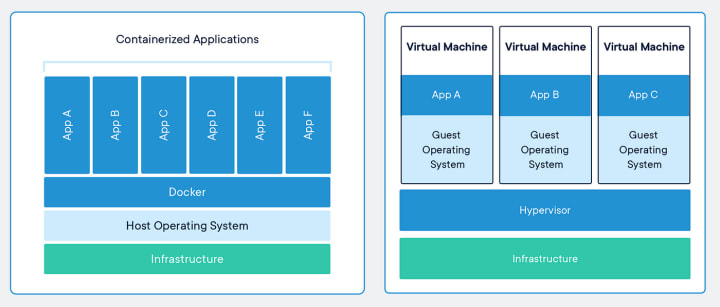
Source - https://medium.com/swlh/what-exactly-is-docker-1dd62e1fde38
Docker is a containerization technology that allows developers to package an application along with all its dependencies into a container. These containers are lightweight, portable, and can run on any platform that supports Docker. A docker container simplifies the process of building, shipping, and running applications, making it easier to manage and scale them.
What are Microservices?
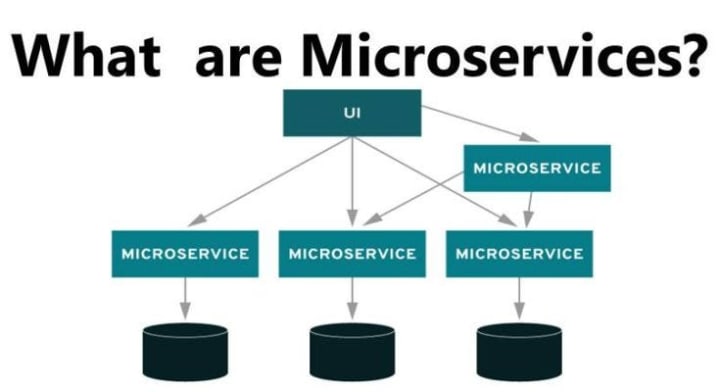
Source - https://medium.com/@emad.bin.abid/microservices-an-introduction-691aeb36aada
Microservices are a software development approach that structures an application as a collection of loosely coupled services. Each service performs a specific function, communicates with other services through APIs, and can be developed, deployed, and scaled independently of other services. Microservices architecture promotes agility, scalability, and resilience, enabling organizations to deliver high-quality software faster.
See More: Authentication & Authorization in a microservices architecture
Key Challenges to Build a Microservices Architecture
While Docker microservices architecture as well as docker containers offer many benefits, there are also some key challenges that organizations may face when implementing this approach. Here are four common challenges:
1. Managing Complexity
As the number of microservices grows, managing their interactions and dependencies becomes more complex. Developers need to ensure that each service can communicate with other services, manage service discovery, and ensure that updates to one service do not break another service.
2. Ensuring Consistency
With multiple services running in different containers, ensuring consistency across environments can be challenging. Developers need to ensure that each service can run in any environment, without dependencies on specific hardware or software configurations.
3. Ensuring Security
With microservices communicating through APIs, security becomes a critical concern. Developers need to ensure that each service is secure and can only be accessed by authorized users.
4. Managing Data
With each service having its own data store, managing data consistency and synchronization across services can be challenging. Developers need to ensure that data is properly stored, accessed, and synchronized across services.
See More: How to Pick the Best Languages for Microservices Architecture
Top 5 Principles to Enable Your Architecture
To build microservices with docker architecture, it is essential to understand the principles and best practices involved. Here, we will discuss the top five principles to enable your architecture and the relationship between Docker and Kubernetes.
Principle 1: Design for Failure
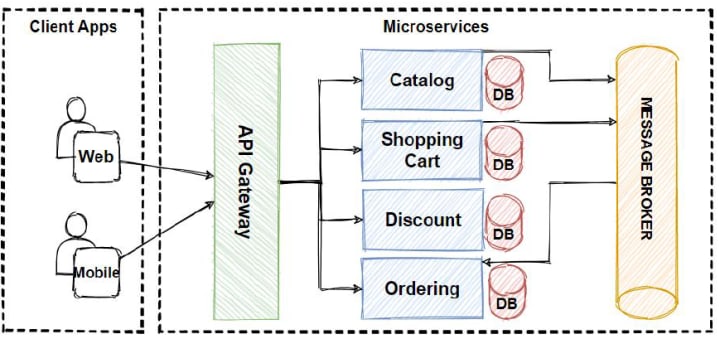
In a microservices architecture, failures are inevitable. Therefore, it is important to design for failure. Each service should be designed to be independent of the other services.
This means that each service should have its own data store, its own business logic, and its own user interface. This allows each service to fail independently without affecting the other services.
Docker microservices architecture is an excellent way to achieve this. Docker is a platform that allows developers to build, ship, and run applications as lightweight containers. Docker containers are isolated and can run anywhere, making them ideal for a microservices architecture. Docker containers are designed to be self-sufficient, which means they can be deployed and scaled independently.
Principle 2: Keep Services Small and Focused
Each microservice should be small and focused on a specific task. This allows for easier maintenance, testing, and deployment. Keeping services small and focused also makes it easier to scale individual services independently.
Docker containers make it easy to keep services small and focused. Docker containers are lightweight, and each container can be designed to run a single service. This means that each container can be focused on a specific task, making it easier to maintain, test, and deploy.
TO READ THE FULL BLOG...
About the Creator
Keep reading
More stories from thirdrocktechkno2024 and writers in 01 and other communities.
How to Create an NPM Package for React Native?
Introduction Building an app requires a lot of work from the JavaScript side and the react-native side. So, a custom package can help at this point (you can simply call the npm package). So, React Native npm packages are developed by developers and ready to use. Today, I'm here to explain everything related to creating a custom package and uploading it to the npm store/registry.
By thirdrocktechkno2024about a year ago in 01
AI in Transportation: How It’s Shaping Mobility in 2026
Look, I get it. You're stuck in traffic again, late for work, watching the minutes tick by. Been there, mate. But here's the thing. AI in transportation is fixin' to change all that, and I'm not talking some far-off sci-fi dream. This stuff is happening right now, in 2026, on roads you probably drive every day.
By Sherry Walker4 days ago in 01
How Should You Plan an ICO Token Sale Marketing Campaign in 2026?
Initial Coin Offerings (ICOs) have evolved significantly since their inception. By 2026, the market demands far more than speculative hype and superficial awareness. Investors are highly discerning, regulatory scrutiny has increased, and projects must demonstrate real utility, transparency, and sustainability. A token sale marketing campaign, therefore, must be meticulously planned to achieve long-term growth and trust in the ecosystem.
By Jack santo2 days ago in 01




Comments
There are no comments for this story
Be the first to respond and start the conversation.