
A Complete Beginner’s Guide to SEO
You Don’t Want to Get Lost in the Jungle


As writers, we care about the written word. We spend a lot of time and energy crafting our articles and stories. We try to make sure that each word, sentence, paragraph, and page are building blocks of a cohesive whole. So why should you care about Search Engine Optimization? Maybe you don’t. Perhaps all you worry about is creating the piece and don’t care who reads it. But if you are here, reading this, that is probably not the case. So, what is SEO, why should you care, and how can you make use of it?
Read on, friends, read on.
What is SEO?
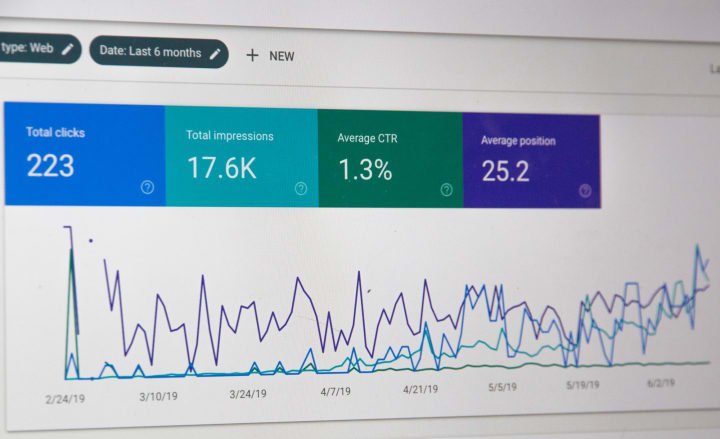
Search Engine Optimization (SEO) is the practice of optimizing a page or website for higher rankings in the organic search results within Google, which controls 90% of the market share. When you search on Google, it uses a very complicated algorithm to display the results depending on how it ranks each site. And there are over 200 factors that affect that ranking. Some of those factors you can influence, and some are just black magic.
Of course, the top two or three sites, marked as ads, pay to be there. The good news is that most people ignore those as having no validity. After that, the ranking is done by what is called organic results. Google bases these results on those 200 factors, including how often users click on them, and how long they stay there. And this is the first point you need to know. The longer people spend on your page, the higher it will rank in the organic results. This is one reason Medium factors in reading time for articles and not just clicks.
So, SEO is the practice of optimizing your website, page, or in this case, article to get the highest ranking. A higher ranking will result in more visitors, which will increase the ranking, and so on. The ultimate goal is to rank on the first page or two because people rarely look beyond that.
Why do you care?

There are over three billion Google searches daily. Ideally, you want some of those searches to show your work. If people can’t find your article, they aren’t going to read your article, no matter how good it is. Partnering with a site like Medium certainly helps, but ultimately, it’s up to you to create content that will rank higher. And again, it is an iterative process. Higher ranking means more views, which means higher ranking, etc.
In the early days of SEO, websites frequently spammed their sites with high ranking keywords and phrases. The articles sounded clumsy, and only click-bait and Pay-Per-Click (PPC) sites used them. Google, through continually evolving algorithms, squashed some sites that trie to game the system to boost their place in the jungle of the Internet. And they continuously change their formulas to do so. They honestly want to try and show users the best results from their search. But that doesn’t mean you can’t use basic, accepted practices to move your article up in the ratings.
How can you use it?
First, do your research. Figure out what words or phrases in your article people search for most often. You can search using key phrases from your article and see what comes up. In the top results, you are likely to see listicles, but also traditional articles with power words like essential, complete, and ultimate. You should also check Twitter and see what is trending and if you can piggyback on those words.
Or you can use tools like Answer the Public or UberSuggest to find keywords and phrases that are getting the most searches. If, for instance, I research food photography, that phrase ranks very high by itself. But the same phrase, combined with the word tips, takes the next three spots. So, while food photography is a good keyword phrase, if I used food photography tips, I not only gain those extra clicks, but it becomes what is known as a long-tail keyword, which Google ranks even higher.
Once you have your list of keywords, you need to incorporate them into your article. The first and hopefully obvious place is in your title or sub-title. Also, try to place it high in the first paragraph. This will make it appear in the summary that shows in search results, helping to boost it even more. If you are using subheadings, place your main keyword in one of those. Finally, make sure your primary keyword or phrase appears in your closing paragraph. Don’t get spammy with your keywords. There is a fine line between not enough and too much, and only Google knows where that line is.
One place that webmasters make use of SEO techniques is in the site’s metadata. Unless you are building a site yourself, you won’t have access to that. But where you can use that technique is in the Alt-Text of images. You should be descriptive of the image but work in your main keywords wherever appropriate.

Build it, and they will come is as mythical as Ray Kinsella’s baseball field, and the days of the world beating a path to your door because you built a better mousetrap are long gone. In today’s world, you need an edge to stay ahead of the competition, and in the jungle of the Internet, SEO is that edge.
You write because you are a writer. But hopefully, you want to share your writing with the world. That can’t happen unless the world can find your article. With a little research and effort, using these SEO tips, you can increase the likelihood that the world will find your article.
If you enjoyed this article, please consider dropping me a tip below. Thanks for reading.
About the Creator
Darryl Brooks
I am a writer with over 16 years of experience and hundreds of articles. I write about photography, productivity, life skills, money management and much more.
Keep reading
More stories from Darryl Brooks and writers in 01 and other communities.
How to Gain More Followers On Twitter
I know many of you will bristle at that sub-title. Twitter? The most powerful? Are you kidding? In terms of raw numbers, depending on the statistics, it’s not in the top five, maybe not even the top ten. But in terms of easily attainable, global reach, especially for writers, I stand by my statement. Also, more than any other site, the strategic use of hashtags is king on Twitter.
By Darryl Brooks5 years ago in 01
5 Legitimate Crypto Recovery Companies
The cryptocurrency landscape in 2025 continues to evolve, with over $3.7 billion lost to scams, hacks, and fraud in 2024 alone, according to Chainalysis reports. While blockchain’s immutable nature makes reversal impossible, specialized recovery firms leverage forensic tracing, legal action, and law enforcement collaboration to retrieve stolen digital assets. This guide profiles five legitimate, established players in the crypto recovery space—not as endorsements, but as verified options with transparent operations, documented methodologies, and publicly reported outcomes. Success in recovery depends on timing, chain transparency, and jurisdictional cooperation. No firm guarantees results, and self-reported success rates should be viewed critically.
By Garry Oneal6 days ago in 01




Comments
There are no comments for this story
Be the first to respond and start the conversation.