
7 low- light plants for you
this is the list of 7 low- light plant, perfect for filling every inch of your space with plants and turning it into a real jungle.

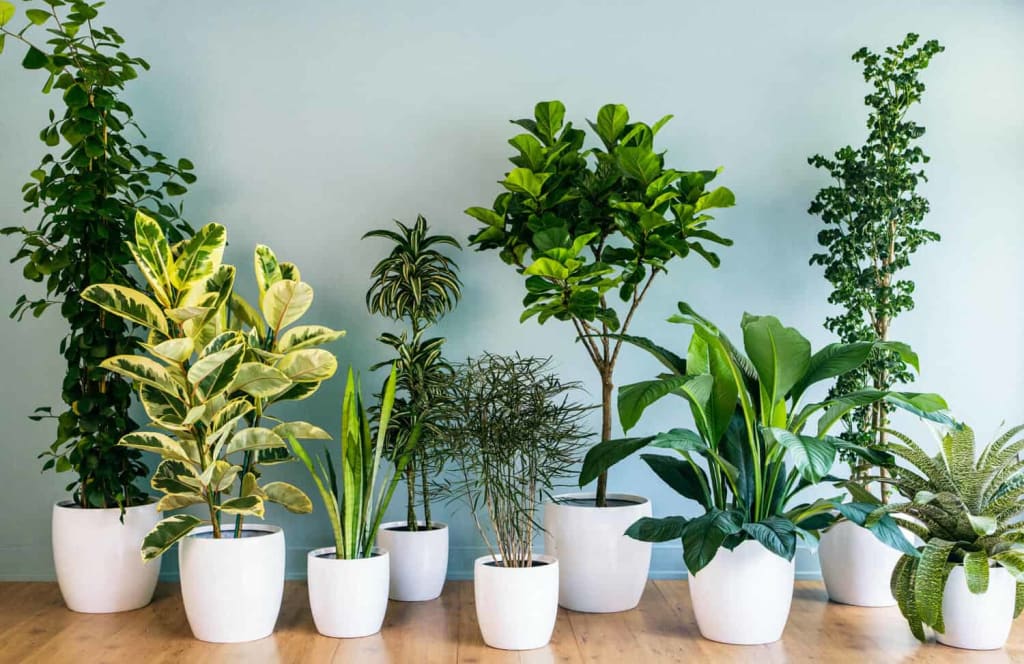
If your apartment doesn’t get much light, or if all the well-lit spots are already filled with plants, these are the ones for you :)
1. Fittonia:
This is a small but very beautiful plant with extraordinary colors and patterns on its leaves. Each leaf is slightly different, and they appear as if they have been painted. Due to these unique patterns, it is known as the "mosaic plant." Without a doubt, this feature draws attention, which is why it has become so popular.
Fittonias are small plants, growing up to 20–30 cm. They have a bushy habit with oval, dark green leaves covered with a dense network of contrasting veins, arranged in pairs on the stems.
Fittonias are quite demanding in terms of care. In the wild, these plants grow in the underbrush of humid forests, meaning they thrive in warm, humid environments with limited sunlight. If we provide them with similar conditions, they will delight our eyes for a long time.
2. Peace Lily:
The Peace Lily is one of the most popular houseplants, and it's easy to see why! It's an exceptionally decorative plant, admired for its elegant shape, beautiful dark green leaves, and stunning white flowers with a captivating fragrance. It fits perfectly in all types of interior styles, from classic to modern.
This striking indoor plant also has the ability to purify the air from toxic substances. It absorbs mold spores and harmful radiation emitted by electronic devices. During photosynthesis, the Peace Lily takes in and breaks down harmful substances from the environment. Additionally, it humidifies the air and converts carbon dioxide into oxygen.
3. Sansevieria (Snake Plant):
This eye-catching plant is not only attractive but also very easy to care for. It’s the queen of the office and home plant category. Sansevieria is a decorative plant that thrives even where other species struggle to grow: in offices, factory halls, and corridors.
It features striking leaves that you can admire for hours. The plant isn’t demanding; it grows well on a sunlit windowsill or in a shaded spot. It will look stunning no matter where you place it. Sansevieria is ideal for allergy sufferers, as it purifies the air from toxins.
Sansevieria is prized for its adaptability and ease of care. It can survive in various lighting conditions and is relatively resistant to neglect, making it perfect for beginner plant owners.
4. Calathea:
Calathea comes from the underbrush of tropical forests, and each leaf looks like it has been hand-painted. The original patterns on its leaves, characteristic of its species and variety, make Calathea a very decorative plant. It’s not the easiest plant to grow for beginners, but with a bit of knowledge on how to care for it, you can successfully cultivate Calathea.
Calathea needs warmth and humid air. Ideally, it should be kept in temperatures between 18–25°C (64–77°F). The higher the temperature, the greater the humidity should be. A perfect spot for growing Calathea would be a greenhouse, a bright and warm bathroom, or kitchen.
High humidity is essential for Calathea's success. In summer, it may need daily misting, and in winter, at least twice a week. It should not be placed near a hot radiator, as it does not tolerate dry air.
5. Rhapis Palm (Lady Palm):
Rhapis excelsa is a palm from Asia, Australia, and New Zealand. Its growth is slow, which allows it to form strong leaves with a solid base, resistant to low light conditions. It withstands drought for extended periods, and its feathery leaves become larger with age, with naturally brown tips. This large houseplant can decorate offices, receptions, and dimly lit spots in modern apartments. In its natural environment, it grows up to 5 meters high, but in a home setting, it typically reaches about 2 meters.
Rhapis and other indoor palms are resilient houseplants that enjoy moderate humidity and watering. They can tolerate temperatures from 5–25°C (41–77°F). They can be propagated by root offsets during spring.
6. Aspidistra:
Aspidistra is a forest perennial that naturally grows in the dark, cool forests of Japan and China. It produces underground rhizomes from which beautiful, dark green, upright leaves grow. These leaves are on short stems, elongated, pointed, and can reach up to 60 cm in length. The leaves are the main decorative feature of the plant and have excellent ornamental value. When cut, they retain their freshness for a long time, which is why they are often used in floristry as additions to bouquets.
Aspidistra is known for its low maintenance and high resistance to difficult conditions. It’s one of the easiest houseplants to grow. It can tolerate any position, even dark ones, but it should not be placed in direct sunlight as it may burn the leaves.
7. Lucky Bamboo:
Don’t be misled by its name. Lucky Bamboo isn’t actually bamboo but Dracaena Sanderiana. Its "bamboo-like," twisted stems are the result of special cultivation.
This is an indoor plant with exceptional symbolism and easy care. It originates from West Africa and is considered a symbol of wealth and good luck in Feng Shui. It is characterized by a flexible stem that can be shaped in various ways and leaves with an intense green color. Growing Lucky Bamboo is simple, whether in water or soil. If growing in water, it's important to change the water every 2–3 weeks, using boiled or filtered water. The plant should be placed in a bright location, but not in direct sunlight. When grown in soil, it requires humus-rich soil and watering 2–3 times a week. In winter, it should be watered less frequently.
About the Creator
lena bandurska
Hey! I write book reviews, and maybe in the future, something else. My work is marked as "created by AI" because I write everything in Polish—my native language—and I translate using ChatGPT. :)
Keep reading
More stories from lena bandurska and writers in 01 and other communities.
Stephen King "Fairy tail"- review
Fairy Tale, in my opinion, is one of Stephen King’s finest works, despite the fact that its plot strays a bit from the author’s usual style. It’s a purely fantasy novel, though it still carries the signature touch of horror that fans of King’s work have come to expect. What makes Fairy Tale stand out, however, is its mix of magical elements and deep human emotions. While King is best known for his horror novels, this book explores the realm of fantasy in a way that feels both fresh and exciting, with just enough of his trademark eerie atmosphere to keep things intriguing.
By lena bandurskaabout a year ago in 01
Understanding Crossdressing Culture and Modern Crossdresser Shops in Australia
Crossdressing refers to the act of wearing clothing traditionally associated with another gender. Throughout history, people have practiced crossdressing for cultural, theatrical, personal, or social reasons. Historical records show that crossdressing has appeared in many civilizations, including ancient societies where clothing and gender roles were more fluid than often assumed.
By James Mburu7 days ago in 01
Multi Directional Forklift: The Future of Flexible Warehouse Handling
Modern warehouses and logistics centers rely heavily on efficient material‑handling equipment. Among the many machines used in warehouses, the Multi Directional Forklift stands out as one of the most versatile solutions for handling complex loads in tight spaces. As storage facilities become more compact and demand faster operations, businesses are increasingly adopting advanced forklifts that maximize space, safety, and productivity.
By charliesamuel6 days ago in 01
The Politics of Playing Dress-Up
Well, to start off I'd like to say a happy world book day to all who celebrate. I know I haven't really posted anything on my socials about it but I'm not a jubilant kind of person. I lay low most of the time. Let's start off with a popular anecdote from the vaults...
By Annie Kapur7 days ago in Geeks




Comments (1)
Nice list. Very helpful. Thanks for sharing.