
7 Essential Dental Hygiene Instruments Every Assistant Should Know
In this guide, we will discuss 7 types of dental hygiene instruments, including their design, functions, and importance in dental care.
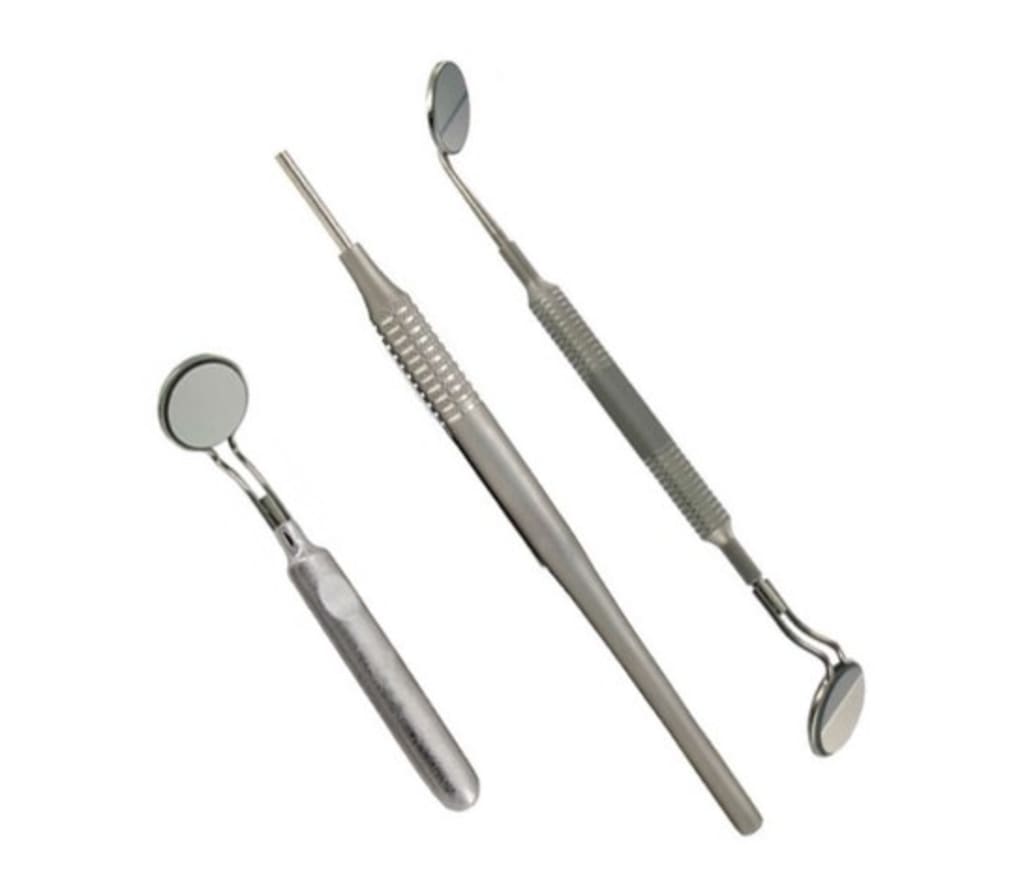
Dental hygiene instruments are essential tools for dentists and hygienists. These tools help maintain oral health by preventing and treating plaque, cavities, and gum disease.
These instruments are crucial for effective dental care, as they clean teeth, assess oral health, and carry out polishing and finishing procedures.
For dental assistants, it's important to understand these tools as they play a major role in ensuring patient care and procedural efficiency.
As dental assistants handle, prepare, and maintain these instruments, their expertise is significant in a clinical setting.
In this guide, we will discuss 7 types of dental hygiene instruments, including their design, functions, and importance in dental care.
1. Mouth Mirrors
Mouth mirrors are some of the most basic but essential tools in dentistry.
Mouth mirrors are made up of a small, round mirror attached to a sturdy handle, which is typically metal or plastic. The mirror's surface can be plain or concave, depending on how much magnification is needed.
Uses:
- Provides a clear and enlarged view of areas in the mouth that are difficult to see, such as the back of molars.
- Illuminates specific areas, making it easier to see in poorly lit parts of the mouth.
- Helps to move soft tissues like the tongue and cheeks, allowing easy access during procedures.
Mouth mirrors are an essential tool for dental assistants, helping them to assist dentists more effectively during examinations and treatments.
2. Probes
Dental Probes are precision instruments essential for diagnostic and monitoring purposes.
Dental probes are thin, elongated tools, often made of stainless steel, and have pointed tips with markings to measure in millimeters for precise assessments.
Uses:
- Measure periodontal pocket depths to check gum health.
- Look for irregularities such as cavities, plaque, and tartar deposits on tooth surfaces.
- Monitor periodontal treatments and their progress over time.
There are two main types of instruments: periodontal probes and explorers, each with its own specific diagnostic application. It is essential for dental assistants to have these tools sterilized and available for use during examinations.
3. Scalers and Curettes
Scalers and curettes are essential hygiene instruments for detailed cleaning and plaque control.
Scalers: These are sharp-tipped tools, designed to remove tartar and plaque from above the gum line for supragingival cleaning.
Curettes: With rounded tips, these are ideal for subgingival cleaning, which involves cleaning below the gum line.
Uses:
- Removing stubborn calculus that brushing cannot eliminate.
- Smoothing tooth surfaces to reduce plaque buildup and make cleaning easier.
- Preventing periodontal diseases and maintaining healthy gums.
Dental assistants play an essential role in preparing and sterilizing scalers and curettes for hygienists and dentists, ensuring a smooth cleaning process.
4. Forceps
Dental Forceps are multi-purpose tools for many dental surgical procedures. They have scissor-like handles and specialized tips for different procedures. Available in many sizes and styles, forceps are essential for various dental procedures.
Uses:
- Tooth extraction: Forceps are used to grip teeth securely, allowing for their removal with minimal trauma.
- They handle small items such as cotton rolls, gauze, and dental fragments.
- They are also used to adjust or position materials in the oral cavity during procedures.
Dental assistants typically prepare and pass the appropriate forceps to dentists, thereby ensuring efficient treatment.
5. Suction Devices
Suction devices are the essential devices designed to keep the patient's mouth clean and dry.
These tools are high-volume evacuators (HVE) and saliva ejectors. HVEs remove larger debris with powerful suction. Saliva ejectors, on the other hand, provide gentle, low-pressure suction.
Uses:
- Removing saliva, blood, and debris from the patient's mouth during procedures helps keep the area clean.
- The treatment area must be kept dry to ensure better visibility and precision.
- Preventing the accumulation of fluids enhances patient comfort.
Dental assistants skilfully operate suction devices to assist dentists during procedures, thus ensuring optimal outcomes and patient safety.
6. Dental Syringes
Dental syringes are crucial for efficient delivery of medications and solutions.
These tools consist of a barrel, plunger, and a fine needle, enabling precise administration of fluids. They can be made of metal or high-quality plastic.
Uses:
- Applying local anaesthesia to numb parts of the mouth.
- Cleaning teeth and gums during and after treatments.
- Providing fluoride or medicated solutions to specific areas.
Dental assistants must prepare syringes correctly and ensure their safe use for successful treatments.
7. Ultrasonic Scalers
Ultrasonic scalers are advanced tools, designed to remove plaque and tartar efficiently.
These devices are powered by ultrasonic technology and feature a handpiece with a tip that vibrates, emitting high-frequency sound waves to dislodge deposits.
Uses:
- Easily breaks down tough tartar and stains.
- Cleans deep periodontal pockets effectively.
- Reduces treatment time compared to manual scaling.
Dental assistants set up and maintain ultrasonic scalers. They ensure these tools work optimally for hygienists and dentists.
Importance of Understanding Dental Hygiene Instruments
Dental assistants must have a deep understanding of dental hygiene instruments. They should be able to identify, use, and care for these tools.
This expertise boosts team efficiency and enhances patient care. Moreover, staying updated on the latest dental tools is crucial. It ensures they remain key players in modern dentistry.
Conclusion
Dental hygiene instruments are essential to any dental practice's success. From diagnostic tools such as mouth mirrors and probes, to advanced devices like ultrasonic scalers, each instrument has a specific role in oral health care.
Dental assistants must master these tools. They are crucial for supporting dentists and providing great patient care.
By knowing their functions and applications, dental assistants can make a significant contribution to the success of treatments!
FAQs
1. What are the essential dental hygiene instruments for a dental assistant to know?
Dental assistants need to know basic hygiene tools like mouth mirrors, probes, and scalers. They also use curettes, forceps, suction devices, and ultrasonic scalers. These instruments are essential for diagnosis, cleaning, and treatment.
2. How do dental assistants ensure instruments remain sterile?
Dental assistants must follow strict sterilization protocols. This involves cleaning instruments, using ultrasonic cleaners, and autoclaving to kill all bacteria and pathogens.
3. Why are ultrasonic scalers preferred over manual scalers?
Ultrasonic scalers are faster and more efficient in removing tartar and plaque. They reduce hand fatigue for practitioners. They also make patients more comfortable.
About the Creator
Keep reading
More stories from allex haryy and writers in 01 and other communities.
MLOps vs. DevOps: Key Differences and Similarities
The speed of innovation has become inextricably linked to a company's ability to deliver dependable software and intelligent systems. That is the modern market for you. Anyway, for more than a decade, DevOps has served as the foundational methodology. It has brought together software development and IT operations teams to achieve continuous integration and continuous deployment. But with the rise of AI and ML, a new level of complexity has been created. The kind that traditional DevOps practices cannot fully address. ML models are not like standard application code; their performance is inextricably linked to the quality and evolution of the data they consume. Hence, to bridge the gap between the experimental nature of data science and the rigid demands of production IT, MLOps (Machine Learning Operations) was developed.
By Ryan Williamsona day ago in 01



Comments
There are no comments for this story
Be the first to respond and start the conversation.